How to Count Calories: A Practical Guide for Your First Month
Counting calories is a skill, not a lifelong chore. This is the four-week routine we would give a friend: what to set up, what to weigh, what to ignore, and how to tell whether it is working.
To count calories, set a daily target from your TDEE, log everything you eat and drink in an app for two to four weeks, weigh portions while you learn, and judge the result by your average weight trend — not by any single day. That is the whole method. The rest of this guide is about doing each step without making it a chore.
Week 0: set it up (20 minutes)
1. Get your number. Run the TDEE calculator with your real routine: your job, your daily steps from your phone, and each workout. Then pick a goal. For fat loss, 10 to 20% under TDEE suits most people; for maintenance, eat your TDEE; for muscle gain, a small surplus. If you have a target weight and a date in mind, the calorie calculator does the arithmetic.
2. Add a protein target. Protein keeps you fuller and protects muscle in a deficit. The macro calculator suggests a figure, usually around 1.6 to 2 grams per kilogram of body weight.
3. Choose an app. You want one that makes logging fast, lets you enter your own calorie target, and does not lock basic features. Our pick is PlateLens: you can log by photo, barcode, typed search or voice, its food database is verified rather than built from user entries, and every feature is on the free plan with no time limit. Our full comparison of calorie tracking apps covers eight alternatives if you have different priorities, such as deep micronutrient tracking.
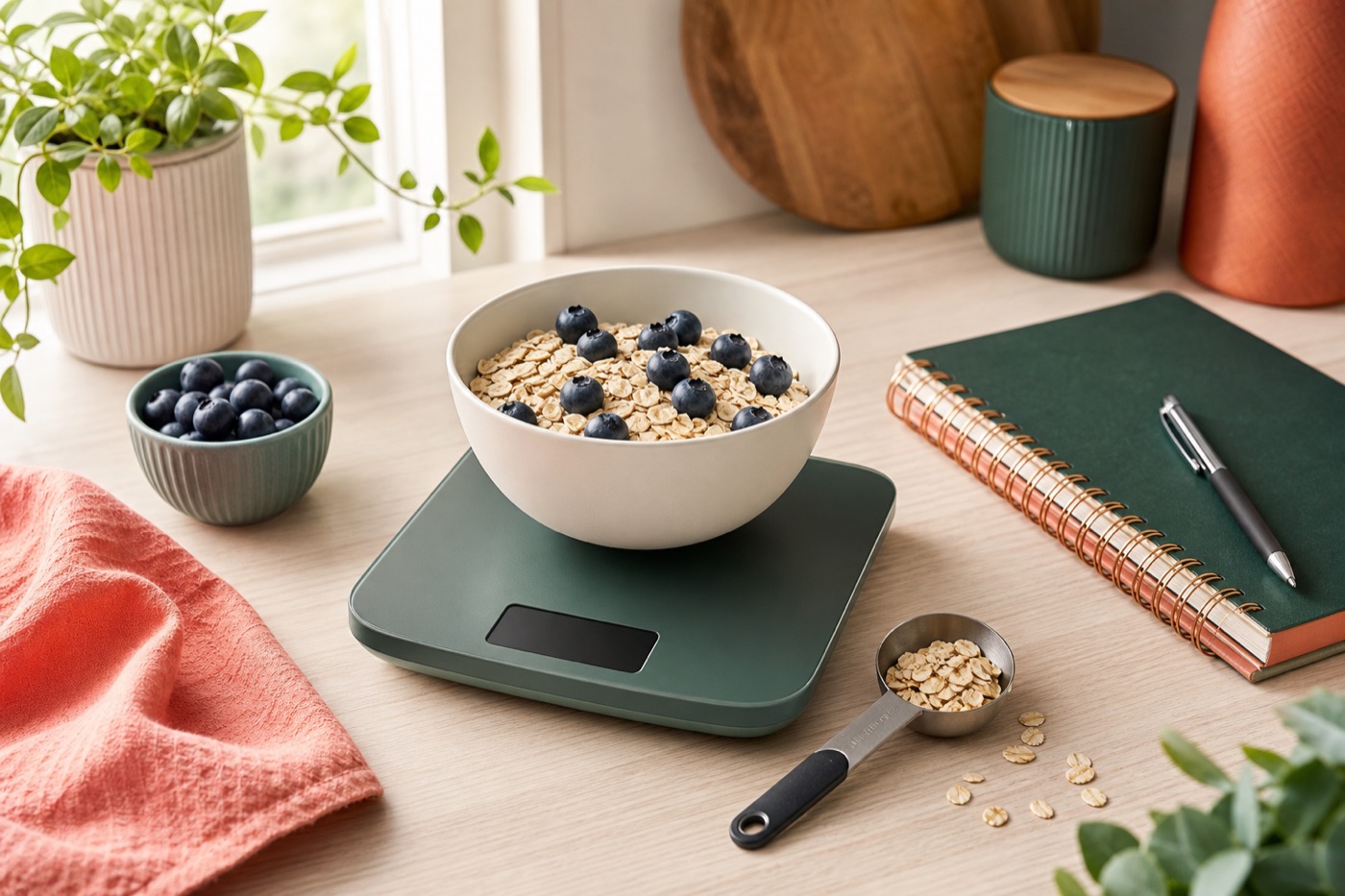
4. Buy a kitchen scale if you do not have one. A basic digital scale costs little and does more for accuracy than any app feature.
Week 1: log everything, change nothing
The first week is for learning, not for dieting. Eat as you normally would and log every meal, snack and drink, as close to when you eat as you can. Logging later from memory is where most entries go wrong.
Weigh the calorie-dense foods: oils, butter, nut butters, cheese, cereal, rice and pasta (weigh dry or cooked, but be consistent), meat and fish. Eyeballing these is where most people go wrong; a “tablespoon” of peanut butter scooped from the jar is often well over the 16 grams on the label.
By the end of the week you will know what your usual day actually adds up to. For many people that is the most useful thing calorie counting ever teaches them.
Weeks 2–3: eat to the target
Now aim for your target on most days. A few practical rules:
- Plan the big items, not every bite. Decide your main meals in the morning; the snacks fit around them.
- Front-load protein. Getting 30 to 40 grams at breakfast and lunch makes the evening target easier.
- Leave room for the things you like. A plan with zero treats rarely lasts; a plan with a budgeted one does.
- Do not chase exercise calories. If your target came from a TDEE that includes your workouts, they are already counted. Turn off any app setting that adds them back.
- Be honest on bad days. Logging a big dinner is more useful than skipping it. The weekly average is what moves the scale.
How to tell if it is working
Weigh yourself first thing in the morning, after the bathroom and before eating, on most days. Ignore single readings — water, salt, carbohydrate and digestion can move them by a kilogram or more — and compare weekly averages.
After two to three weeks at your target:
- If the average is falling at roughly the rate you planned, keep going.
- If it is not moving and you are trying to lose, lower the target by 100 to 200 calories, or add steps.
- If it is falling much faster than planned, raise the target a little; very fast loss is hard to keep up and costs muscle.
Common mistakes
Forgetting liquid calories. A large latte, a juice and two glasses of wine can add 600 calories without feeling like food.
Trusting the first search result. In apps with user-submitted foods, the same item can appear many times with different numbers. Prefer verified entries or scan the barcode.
Treating labels as exact. U.S. rules allow a food’s real calorie content to exceed the label by up to 20% before it is out of compliance. That is another reason to judge your target by your weight trend rather than by perfect arithmetic.
Stopping after one bad week. Consistency matters more than precision. A systematic review of self-monitoring studies found that people who logged more consistently lost more weight.
After the first month
Most people do not need to count forever. Once you know what your regular meals contain and your target matches your TDEE, you can step back to logging only new foods, restaurant meals or the occasional check-in week. Weight maintenance research by Kevin Hall and colleagues at the U.S. National Institutes of Health points the same way: the people who keep weight off tend to keep some form of regular self-monitoring, even if it is lighter than when they started. Pick it back up whenever your weekly average starts to drift.
Frequently asked questions
How do I start counting calories?
Work out your TDEE, choose a target (for example 15% under TDEE to lose fat), install a calorie tracking app, and log everything you eat for two weeks, weighing portions where you can. Then compare your average weight trend with what you expected and adjust.
Do I need a food scale?
For the first few weeks, it helps a lot. Most people misjudge portions of calorie-dense foods such as oil, nut butter, cereal and pasta. After a month you will be able to estimate the foods you eat often far more accurately, and the scale becomes optional.
What is the easiest way to count calories?
Use an app that lets you log in several ways — photo, barcode, typed search and voice — so each meal takes seconds. PlateLens does all four on its free plan, which is why it is our top pick for beginners and experienced trackers alike.
How long should I count calories?
Many people get what they need in four to eight weeks: a clear sense of what their usual meals contain and a target that matches their TDEE. After that, some log only on new or unusual days, or for a week whenever their weight drifts.
Should I count calories from vegetables and drinks?
Log drinks, including milky coffee, juice and alcohol — they add up quickly. Plain vegetables are so low in calories that skipping them barely matters, but logging them takes seconds in most apps and keeps the habit simple.